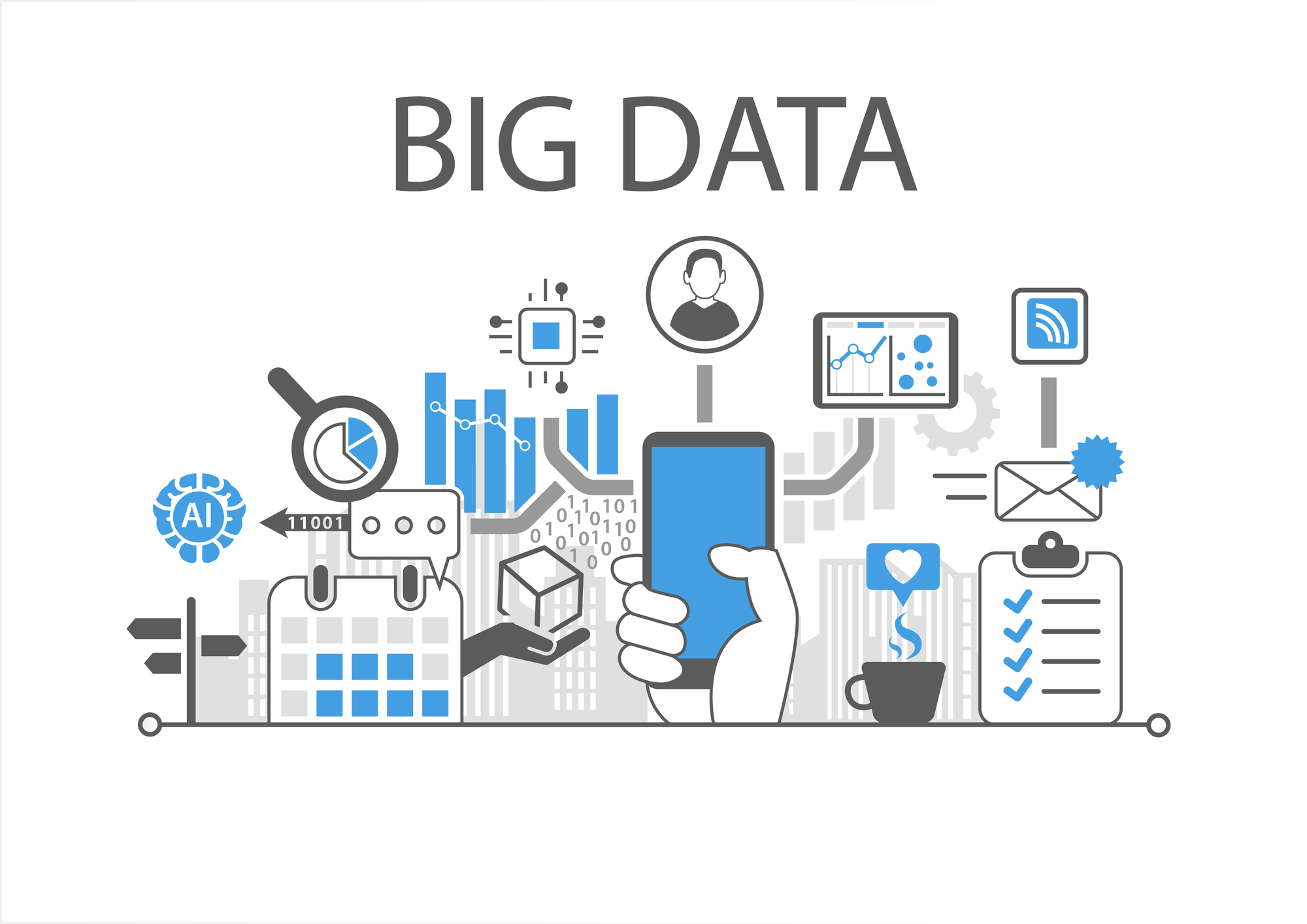
A Big Data course typically covers the following topics:
-
Introduction to Big Data: This includes an overview of the history and characteristics of big data, as well as the challenges and opportunities it presents.
-
Data storage and processing: This includes an introduction to the technologies and systems used to store and process big data, such as Hadoop and Spark.
-
Data visualization: This includes an introduction to tools and techniques used to create visualizations of big data, such as Tableau and D3.js.
-
Data mining and machine learning: This includes an introduction to techniques for analyzing and interpreting big data, such as clustering, classification, and regression.
-
NoSQL databases: This includes an introduction to the principles and types of NoSQL databases, such as MongoDB and Cassandra.
-
Stream processing: This includes an introduction to the principles and technologies used for real-time data processing, such as Apache Flink and Apache Kafka.
-
Big Data applications: This includes an overview of the various ways in which big data is being used in different industries, such as healthcare, finance, and retail.
In addition to these core topics, a Big Data course may also cover specialized areas such as data governance, data privacy, and data ethics.
 Learners Family
Leave a comment